Permits & Regulations 2026/10/07 5 min read
It is natural for every owner to ask before starting: how long does it take to get a building permit? The permit is the gateway between the idea and construction, and every extra week means a delay to the whole project schedule, and possibly to financial commitments with the contractor and the lender.
The honest answer is that the duration is not a fixed number. It depends on several factors, some in your hands and the engineering office's, and some related to the municipality and the nature of the plot. In this article we explain what counts as a normal timeframe, why some applications are delayed, which municipal comments are most common, and how to avoid them before they happen.
The Normal Timeframe
To understand the timeframe properly, it helps to divide the journey into stages, since each stage has its own nature and timing:
- Preparation: reviewing the title deed, obtaining or verifying the survey report, and checking the site requirements
- Design: preparing the architectural design and getting the owner's approval, then completing the specialized drawings
- Submission: the engineering office uploads the application and drawings to the Balady platform
- Review: the competent authority examines the application
- Comments and issuance: responding to any comments, then paying the fees and issuing the permit
With the Balady platform, much of the procedure is now electronic, and review times have improved compared to the past. However, the total duration varies by municipality, building type, plot area, the subdivision plan the plot falls in, and how complete the file is. So we don't recommend relying on a timeframe you heard from someone else's experience, because their plot's circumstances may be completely different from yours.
Which Part Can You Control?
The preparation and design stages are the ones most under your control and the office's. Making design decisions quickly, providing the correct documents, and approving the design without repeated changes all noticeably shorten the overall timeframe. The review period depends on the competent authority, but a high-quality file reduces the chance of repeat reviews.
Causes of Delay
When a permit application takes longer than expected, the cause is usually one or more of the following:
- Missing or unclear documents, such as a title deed that needs updating or a power of attorney that lacks the required authorities
- Title deed details that don't match the survey report or the actual condition of the plot
- A design that doesn't meet the site requirements, so the application comes back with comments
- Specialized drawings that aren't coordinated with the architectural drawings
- The owner changing their mind about the design after the application is submitted
- Late or incomplete responses to comments
- Special plot conditions, such as being in a subdivision with different requirements, or encroachments or boundary discrepancies
Notice that most of these causes are not in the government procedure itself but in the quality of preparation. That's good news, because it means a large part of the delay can be avoided.
The Hidden Delay Before Submission
Many owners count the permit timeframe from the day the application is uploaded to the platform, but significant time is often lost before that: waiting for a title deed update, arranging a power of attorney among several owners, long hesitation over the design, or switching between offices. This time doesn't show on the platform, but it delays the start of construction just as much as a slow review.
So when you set a schedule for your project, count the preparation and design stages as part of the permit timeframe, and start them as early as possible, especially if you have a commitment with a contractor or a set financing date.
Common Municipal Comments
When reviewing an application, the competent authority may issue comments requiring changes before approval. Comments vary from one application to another, but some types recur noticeably:
- Comments on setbacks and distances between the building and the plot boundaries
- Comments on the building coverage ratio, number of floors, or permitted height on the site
- Comments on details of roof annexes, boundary walls, or entrances
- Comments on parking or entrances according to the area's requirements
- Comments on unclear sheets or missing technical details
- Conflicts between the architectural and structural drawings or other disciplines
How Is a Comment Handled?
When a comment appears, the engineering office reads it carefully, identifies what needs to change, then revises the drawings and re-uploads them. What matters is addressing the root of the comment fully rather than fixing only part of it, because a partial response often opens a new round of comments. The faster and more complete the response, the less time is wasted.
How to Avoid Them
Avoiding delays starts long before submission. These practical steps help reduce the chance of comments and shorten the timeframe:
- Review the title deed, ID and power of attorney with the engineering office before design
- Verify the survey report and that it matches the title deed and the actual site
- Ask the office to check the site requirements and explain them to you before drawing the design
- Settle your key design decisions early, such as the number of floors, the annex and the entrances
- Adopt integrated drawings reviewed by a single team to ensure coordination between disciplines
- Make sure the file gets an internal review before it is uploaded to Balady
- Follow platform notifications and approve any requests made of you promptly
At Build Plus Engineering Consultants we work under a certified ISO 9001:2015 quality system, and every permit file goes through an internal review before upload, aiming to minimize comments from the first submission. With over 11 years of experience and more than 334 clients, we know the recurring comments well and address them at the design stage before they reach the municipality.
Is your permit delayed, or do you want to get it right the first time? Book a free 15-minute consultation with a Build Plus engineer to review your application. Contact us on WhatsApp: 0503332019
In the end, the time it takes to get a building permit is no mystery. It is the sum of preparation time, review time and time spent on comments. The parts you can truly shorten are preparation and comments, with a complete file, a design built on the requirements, and prompt follow-up. Focus on these points and your path to the permit will be clearer and shorter.
FAQ
Is there a set timeframe for issuing a building permit?
The timeframe varies by municipality, building type, plot, file completeness and the number of comment rounds. The engineering office can estimate the closest timeframe for your case after reviewing the file.
What are the most common municipal comments?
Among the most common are comments on setbacks, building ratios and heights, specialized drawings not coordinated with the architectural ones, and missing technical details.
Can the permit be sped up after the application is submitted?
The best way is to respond quickly and fully to any comment, follow Balady notifications, and approve anything required of the owner without delay.
Does changing the design after submission delay the permit?
Usually yes, because any major change may require updating and re-reviewing several drawings, so it's best to finalize the design before uploading.
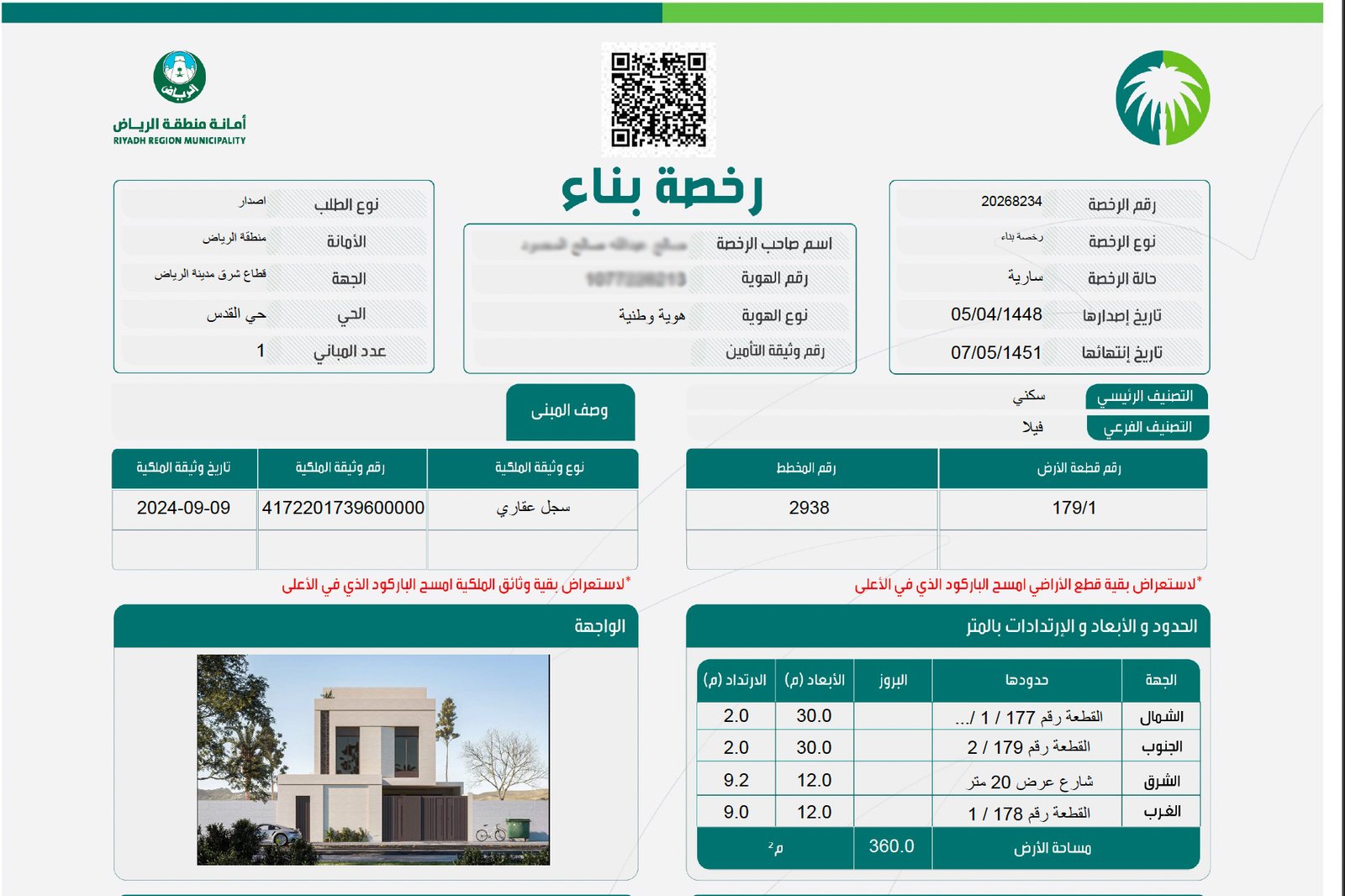 Related ServiceBuilding PermitsFrom preparing code-compliant drawings to issuing the permit via the Balady platform, we handle every step for you.